Smart ventilation - everything in the green?

Good air quality can be measured

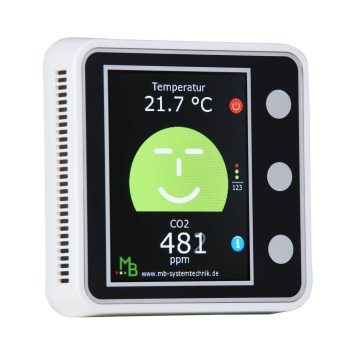
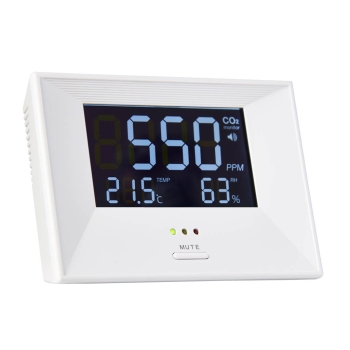
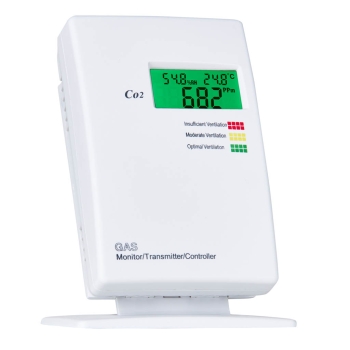
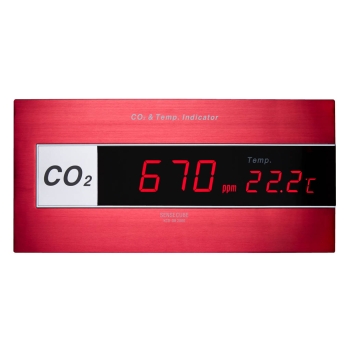
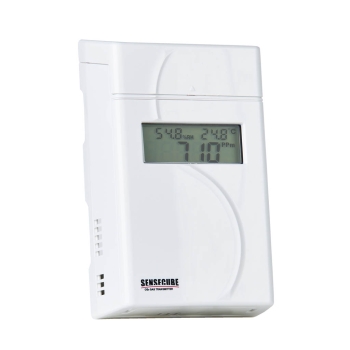
Feeling tired, unable to concentrate, or suffering from headaches? Often, it’s simply due to stale air. Wherever people breathe, CO2 levels rise—in classrooms, offices, and meeting rooms. Our CO2 monitors show the situation at a glance: green means all is well, yellow indicates it’s time to ventilate, and red means you need to act immediately.
The threshold values ​​are based on guidelines from the German Environment Agency (Umweltbundesamt), which also apply to workplaces: levels below 1,000 ppm are considered hygienically safe; between 1,000 and 2,000 ppm, they are a cause for concern; and anything above that is unacceptable. Via analog or digital outputs, our devices can even feed these measurements directly into your ventilation or building management systems.
In addition to CO2, we measure VOCs, fine particulate matter, ozone, noise levels, temperature, and humidity. We provide expert advice and service from our base in Hausham, Upper Bavaria.

Work with focus, ventilate effectively, and keep an eye on humidity—with measurement technology from MB Systemtechnik.

Product characteristics

Analog Output 4-20mA / 0-10V

Analog Output
4-20mA / 0-10V

Digital Output RS485, PWM

Digital Output
RS485, PWM

Display LCD, TFT, Touch

Display
LCD, TFT, Touch

LEDs 10 mm or smaller

LEDs
10 mm or smaller

Switching Output Relay

Switching Output
Relay

Table device

Table device

Wall device Finery, Floating

Wall device
Finery, Floating

Acoustic signal

Acoustic signal

Self calibration

Self calibration

Product Highlights

Transparent pixel

Good to know: Background knowledge

CO2 Ampel Aerosole

How aerosols spread Corona in space, Landesschau Rheinland-Pfalz, SWR Fernsehen, 14.09.2020

How aerosols spread Corona in space

Aerosols are everywhere in the air - no matter where we walk or stand and where we inhale and exhale, even if mostly not visible. Aerosols are basically harmless and they have not only existed since the corona pandemic.

Aerosols spread very quickly and unnoticed. When a person sits in a room and breathes through their nose, the aerosols reach the ceiling after just 30 seconds, together with the warm air that rises upwards.

After a minute, the aerosols have spread around the person within a radius of three meters. After two minutes they have spread throughout the room.

It is important to keep the dose of the inhaled virus particles as low as possible. When we want to meet other people, we are safest outdoors. Inside, frequent burst ventilation helps to get the aerosol particles outside.

However, this will be difficult to keep in winter. That is why CO2 devices are used in schools, for example. They are supposed to give a signal when it is time to open the windows. Because when we breathe we emit carbon dioxide and a lot of CO2 also means a high concentration of aerosols.

Our references